Trump, the "Disclosure President"?
A Cool-Headed Assessment
QUESTO ARTICOLO HA UNA VERSIONE IN ITALIANO

ESTE ARTÍCULO TIENE UNA VERSIÓN EN CASTELLANO

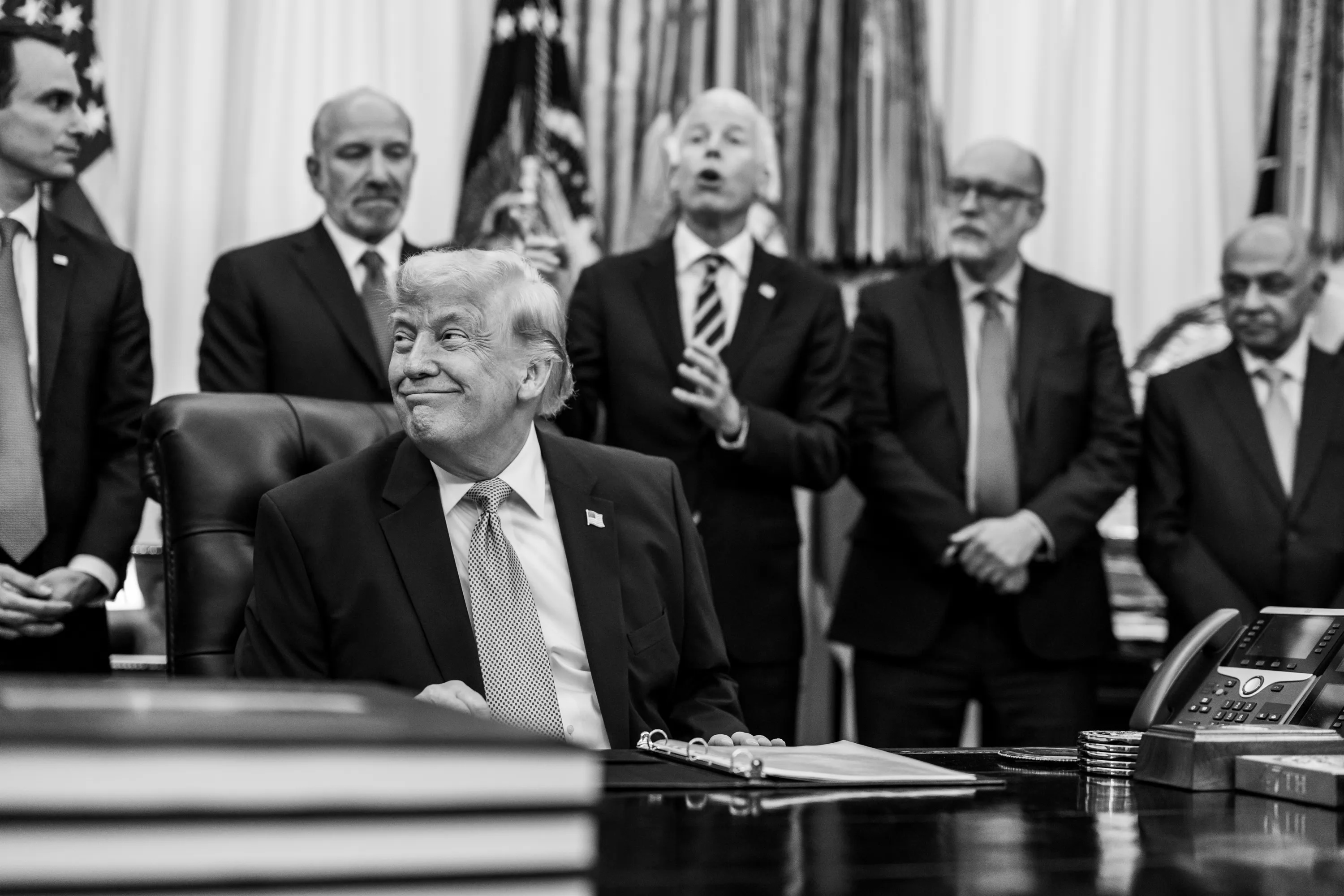
Donald Trump in the Oval Office [Official White House Photo by Joyce N. Boghosian – from whitehouse.gov]
After quite some time away, I'm glad to be writing on this blog again, and I'm doing so to talk about Trump and his initiative to release previously classified documents on UFOs and UAP, known by the acronym PURSUE. I was tempted to write about it when the first batch of files came out, but I preferred to wait a while and see which way things would go. Now that we have reached the sixth release, I think something can be said with good reason.
Patience, after all, is a lesson I have learned well in the twenty or so years I have been studying UAP/UFOs: I have seen more than a few announcements of "epoch-making breakthroughs" that turned out to be flashes in the pan. That is why, when I hear Donald Trump described as the Disclosure President, the president who will finally tell us the truth about UFOs, I feel the need to stop and think. Not out of reflexive skepticism or prejudice, but as a matter of method.
Trump's attitude to the subject has always been that of a poker player. During his first term he alternated sly jokes with half-hints: he said he had heard "very interesting" things about Roswell, but added nothing more. And yet it was under his signature, in December 2020, that the request to the Director of National Intelligence (DNI) for a report on UAP became law. That document, published in June 2021, was the first official text to acknowledge the existence of unexplained cases.
The shift came this year, and in a curious way. It all started with Obama's remarks that aliens are real, later walked back with the clarification that he had seen no evidence of contact with Earth. Trump seized the opportunity, implying that this was classified information and promising to release it. It is not unkind to note that the move also had obvious value as political messaging, a way of competing with the former Democratic president.
What he has actually done
Let's look at the facts, one by one.
The directive. On February 19, 2026, Trump announced on Truth Social that he would direct the Department of War and other relevant agencies to begin the process of identifying and releasing government files on alien and extraterrestrial life, unidentified aerial phenomena (UAP) and unidentified flying objects (UFOs). It is worth stressing: the post does not explicitly mention declassification, and no executive order has been published. The whole structure rests on an order issued through a post on the President's social media platform, and on the administrative acts the agencies adopted afterwards.
PURSUE. In May the Department of War launched the PURSUE Task Force, tasked with coordinating the search, review and publication of UAP records. The name stands for Presidential Unsealing and Reporting System for UAP Encounters, and the files can be viewed on the official website. The first release, on May 8, included reports, photos, videos, witness statements, military records and astronaut transcripts, with cases ranging from 1944-45 to the present day. Among the most interesting items are new details on an object over the Pantex nuclear plant in Texas in 2015, and infrared footage of a six-pointed star-shaped object over the Yellow Sea on January 1, 2025. To date, documents of various kinds have been published in six tranches.
The governance structures. At the top sits a UAP Governance Board, an interagency body created by the Trump administration to coordinate the work of the various government bodies dealing with UAP. The Board draws on several groups of outside experts, but the members of only one are known: the UAP Science Advisory Council, led by Avi Loeb. Its members include, among others, Stanford immunologist Garry Nolan, retired Rear Admiral Tim Gallaudet, skeptic Michael Shermer and anthropologist Peter Skafish. Loeb himself has made clear that the Council's role is purely advisory and it has no access to classified information. As for the other groups, whose existence has been confirmed by the ODNI (the Office of the Director of National Intelligence), neither their members nor their purpose are known. This is no minor detail: the group we know about works only with unclassified data, while we know nothing about those that might have access to classified information.
The NDAs. This is perhaps the most substantive move. On July 21 it was reported that Trump had ordered the Department of War and the intelligence community to allow former employees and contractors to speak with AARO or PURSUE, voiding their previous non-disclosure agreements. On July 31 the ODNI issued an implementing memorandum requiring each intelligence agency to appoint its own PURSUE point of contact. On September 14 the Pentagon formalized a waiver protecting these witnesses from prosecution and career retaliation.
The balance sheet. After six releases, my own assessment of the substance remains lukewarm. The material certainly includes some interesting and decidedly unusual items, but there is no evidence whatsoever of extraterrestrial contact, recovered craft or non-human intelligence: these are simply unresolved cases, that is, phenomena the government is unable to identify. Even NewsNation, the network Ross Coulthart reports for and hardly skeptical on the subject, described the early tranches as underwhelming, heavily redacted and often blurry. The government maintains that the redactions serve only to protect witnesses and the location of sensitive sites; the fact remains that, redactions aside, there is nothing decisive in the published material.
One might think that the operation is in fact a very gradual Disclosure, but my impression is rather of an effort carried out with poor coordination and hampered by systemic difficulty in locating the records to be released. Of course, you have to start somewhere, but the documents published so far suggest we are looking at the low-hanging fruit, the records that were easiest to find.
A further point worth stressing is how little context, if any, accompanies the releases, which severely limits the value of the documents, however interesting they may be.
Then there is a far from trivial detail: the entire initiative rests on a social media announcement and on the agencies' implementing acts, not on a formal presidential instrument, and it hardly needs saying that what is opened with a post can be closed just as easily.
In short, far more "peripheral" transparency than we have ever had. But on the central point, nothing. So rather than Disclosure, what we have witnessed so far could fairly be called disclosure – with a lowercase d.
But what exactly would Disclosure be?
Here we step onto the most slippery ground, and I'll say it frankly: nobody can know what full Disclosure would bring. We can only make reasoned guesses. The most common are three:
- "Soft" Disclosure: confirmation that real, advanced, non-terrestrial phenomena exist, without saying who they are or what they want. This is essentially the road we are on now.
- "Technological" Disclosure: admission of programs to recover craft and reverse-engineer them, the ones David Grusch spoke about, the former Air Force intelligence officer, in his sworn testimony before Congress in July 2023. It would have enormous consequences for industry, defense and the balance of power between nations.
- "Full" Disclosure: official confirmation that ETs exist, that they are here and that UFOs are their craft. This is what everyone means when they use the word, and what, in my view, we will in all likelihood never see.
Why true Disclosure will (most probably) never happen
The reasoning is simple, almost brutal. Officially admitting that UFOs are extraterrestrial craft would mean admitting something else, and something far from minor: that there are entities moving their craft wherever and however they please, poking their noses into nuclear arsenals and test ranges, snooping around aircraft carriers and naval task groups, not to mention their incursions into the most heavily protected airspace on the planet. And, perhaps even worse for the White House, they do so with complete disregard for the mighty USAF and the United States government, which are in fact utterly powerless before them.
And let no one think that this interest in nuclear sites is something new: it is as old as the atomic age itself. According to the research of Robert Hastings, as early as January 1945, months before Hiroshima, anomalous activity was recorded over the Hanford plutonium production plant in Washington State. Between 1948 and 1951 the so-called "green fireballs" repeatedly flew over Los Alamos and Sandia Base in New Mexico, where atomic weapons were being designed, so much so that the Air Force launched a dedicated investigation, Project Twinkle. In March 1967, at Malmstrom Air Force Base in Montana, according to the testimony of several officers, including Captain Robert Salas, some ten Minuteman nuclear missiles suddenly went offline just as a glowing red object hovered over the launch facilities. In 2010, at a press conference at the National Press Club in Washington organized by Hastings himself, seven USAF veterans described similar incidents at several US missile bases and at the RAF Bentwaters nuclear weapons depot in England. And, again according to Hastings, documents that emerged from Russia in the early 1990s indicate that the same thing was happening at Soviet arsenals.
Nor is the interest confined to military installations. Between October and November 2014, more than a dozen French civilian nuclear power plants were overflown, almost always at night, by aircraft that were never identified, and those responsible were never found.
There is also one aspect I find particularly significant: in none of these cases, as far as we know, has there ever been a successful interception. From the fighters scrambled over Washington in the summer of 1952 to the Iranian F-4s sent after a glowing object over Tehran in 1976, every time anyone tried to get close to these anomalous objects, they slipped away with the greatest of ease, leaving the pilots empty-handed. In short, this has been going on for eighty years, and in eighty years no one in the world has ever managed to stop it.
No state, least of all one that presents itself as the world's leading power, can afford to tell its citizens: "They come and go as they please, we don't control our own skies, and there's nothing we can do about it." The pact on which every government rests is the promise of protection. Full Disclosure would be an admission of powerlessness, and for the institutions responsible for national security, especially the military ones, powerlessness is not merely an unwelcome word: it is an ontological impossibility. Their very reason for being lies in their ability to protect, and admitting they cannot would amount to denying themselves.
This inability to admit powerlessness is, to all intents and purposes, a taboo. And it finds a striking parallel in another, broader taboo, one that concerns the state as a whole and that was masterfully analyzed by two leading political scientists: Alexander Wendt of Ohio State University and Raymond Duvall of the University of Minnesota. In 2008 they published an essay in the academic journal Political Theory entitled Sovereignty and the UFO, in which they argue that modern sovereignty is anthropocentric: it rests on the assumption that only human beings govern the world, and it is precisely this assumption that allows states (and therefore the humans who run them) to demand loyalty and resources from their citizens. UFOs, through the mere possibility that a non-human intelligence lies behind them, undermine this foundation. According to Wendt and Duvall, sovereign power cannot admit an exception to anthropocentrism without compromising its own capacity to decide; this is why UFOs are the object of a genuine taboo on the part of political and scientific authorities, and can be "known" only on condition that no one asks what they are.
The parallel, in my view, is clear. Just as the state cannot acknowledge the existence of UFOs without calling into question the anthropocentric foundations of its sovereignty, the security establishment cannot admit its own powerlessness without denying its very reason for being. They are two sides of the same taboo, and in the case of Disclosure they add up: UFOs threaten the foundation of power, and their freedom of movement exposes its powerlessness.
In fairness, it should be said that the two scholars do not claim that UFOs are extraterrestrial: they argue only that we do not know that they are not. Nor do they speak of a conspiracy: the taboo can operate quite unconsciously in the minds of the people who make institutions work. Which, in my view, makes it all the more tenacious.
I am not alone in thinking that the real obstacle is institutional rather than technological. Peter Skafish, an anthropologist and member of the Science Council chaired by Loeb, has put forward an argument that points in the same direction. If there were a de facto interaction between the US government and non-human intelligences, no Congress would have authorized it and no treaty would have ratified it, and it would be very unlikely to survive constitutional scrutiny. Skafish is careful to point out that he is not claiming this has happened. His point is that such exposure would explain eighty years of silence better than the craft themselves, and that the damage to the government would be serious either way: whether officials knew, or did not know. It is the same trap I see, viewed from a different angle. Whatever is admitted, and whoever the president may be, the government comes out of it in pieces.
One might object that the government could present the matter reassuringly: "We know them well, we've been studying them for decades, we have the situation under control." Quite apart from the fact that this would be an admission of having deliberately lied to the American and world public for decades, such a statement would be nothing but a pathetic lie (in fact, the latest in a long series): the data contradict that narrative. Cases like Pantex show it, as do the "orbs" releasing other "orbs" near sensitive sites, and the repeated incursions of unidentified "drones" over the continental United States. I am thinking of the overflights of Langley Air Force Base in Virginia for no fewer than 17 days in December 2023, whose origin is still unknown today. And, for anyone tempted to dismiss the matter with a shrug, it is worth remembering what we are talking about: not the local field where model airplanes are flown on Sundays, but one of the USAF's most important bases, home to several dozen F-22 Raptors, the most advanced air superiority fighter in the world, and to the headquarters of Air Combat Command, which oversees all of the US Air Force's combat units. For the record, it was from here that, in February 2023, the F-22 took off that shot down the Chinese spy balloon.
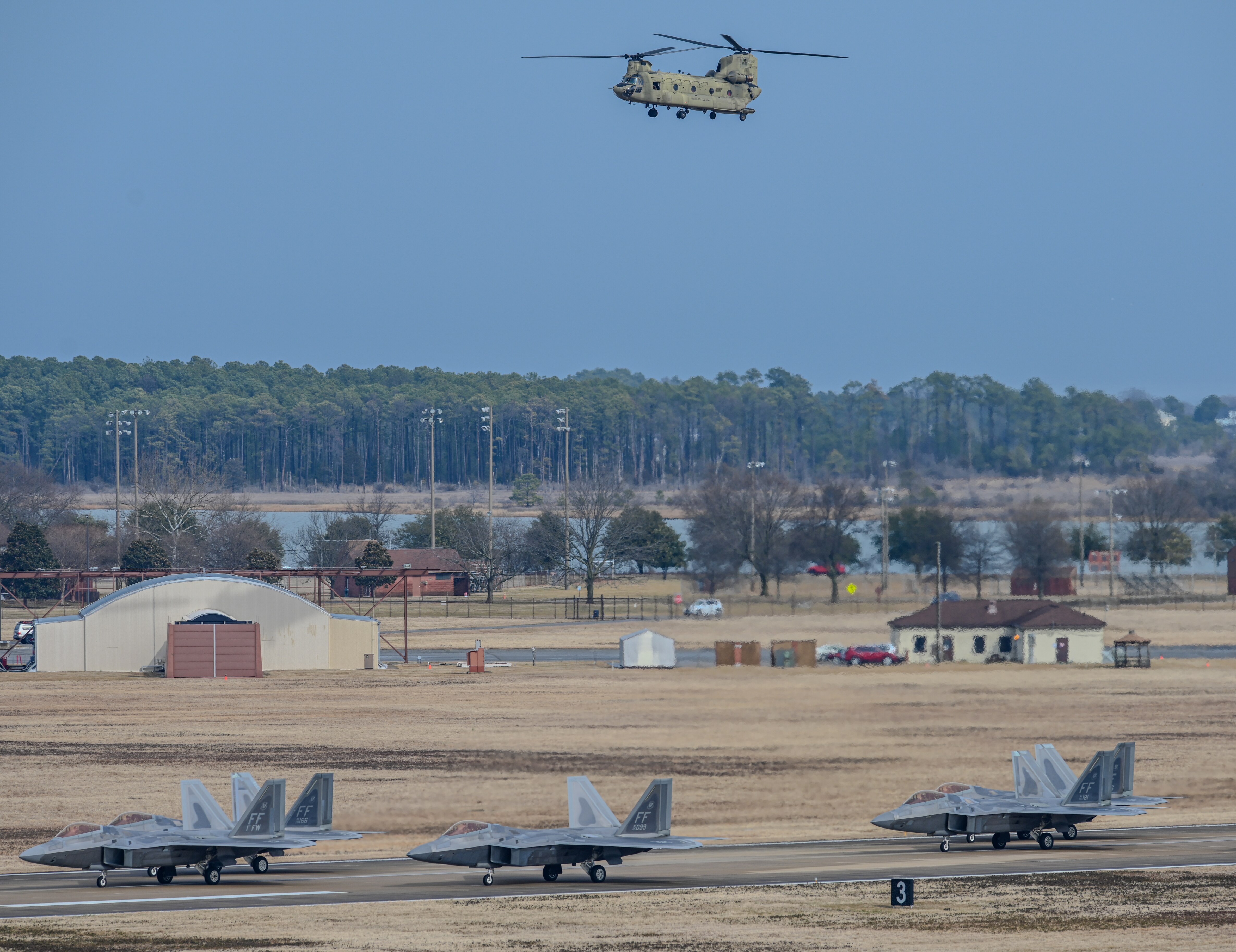
Langley Air Force Base, Virginia (USAF photo by Senior Airman Olivia Bithell – from www.jble.af.mil)
Or of those, confirmed by the military, over Picatinny Arsenal and Naval Weapons Station Earle in New Jersey in late 2024. All these episodes show that, quite simply, there is no control. And it's not just me saying so: in their own way, America's top officials admit it. In 2020 Marco Rubio, now Secretary of State and then chairman of the Senate Intelligence Committee, went so far as to say that it might actually be better to discover that we are dealing with something not of this Earth rather than a technological leap by China or Russia. When the man who now leads the diplomacy of the world's leading power could go so far as to prefer aliens to the Chinese, I think the phrase "groping in the dark" captures it perfectly.
Be careful what you wish for
One last consideration, and one that is particularly close to my heart. Those who call for Disclosure often imagine a liberating, almost messianic moment: benevolent cosmic brothers, clean technologies, the end of wars. Let me be clear: like many enthusiasts, I too would like to see it that way, but life has taught me to take everything with a certain cautious detachment, even the things I most desire.
That is why I want to mention what Jim Semivan, a former senior CIA officer and co-founder of To The Stars Academy, has said: he has warned more than once that the truth could be far less pleasant than we imagine.
One example I find fitting is the Varginha case in Brazil in 1996. The witnesses described a creature that was anything but angelic: small, far from pleasant to look at, with dark, oily skin, large red eyes, and a nauseating smell of ammonia. A far cry from the tall, handsome, blond Nordics described in other contact reports.
If true Disclosure were ever to come and, as a logical consequence, lead to first Contact (by which I mean open, official ET contact), we might discover that "they" are neither beautiful, nor necessarily good, nor interested in us in the way we hope. It is a subject that would deserve a piece of its own, and I intend to write one in a future article. But this possibility alone already changes the terms of the question.
Perhaps, then, the real dilemma is not so much whether the US government will be willing to tell us the truth. It is whether we will be ready to handle it.
Paolo Guizzardi
Versions: 09/27/2026
Sources
- Trump's Truth Social post of February 19, 2026 (reposted on X)
- Al Jazeera – Trump orders Pentagon, federal agencies to release files on UFOs and aliens
- The Hill – Trump on Roswell: "I won't talk to you about what I know about it, but it's very interesting"
- Wikipedia – Preliminary Assessment: Unidentified Aerial Phenomena (2021)
- Department of War – The PURSUE files
- Fox News – Trump releases new UAP records featuring Pantex Plant nuclear site
- DefenseScoop – New science advisory council forms to help US government "resolve the UAP mystery"
- First Contact – UAP Disclosure Timeline 2026
- Fox News – Trump directs agencies to waive NDAs for UAP whistleblowers
- The Debrief – Pentagon Opens New Pathway for Government Insiders to Disclose UAP Information
- NewsNation – Is the Trump administration running a covert UFO program?
- Wikipedia – United States UFO files
- Wikipedia – David Grusch UFO whistleblower claims
- Wikipedia – Robert Hastings (ufologist)
- Wikipedia – Green fireballs
- Wikipedia – Malmstrom UFO incident
- CBS News – Ex-Air Force Personnel: UFOs Deactivated Nukes (2010)
- Al Jazeera – France stumped by drones over nuclear sites (2014)
- Alexander Wendt and Raymond Duvall – Sovereignty and the UFO, Political Theory 36(4), 2008, pp. 607-633
- UFO News – Government UAP Council Member Still Wants Disclosure Slowed Down (Skafish)
- WHRO – The Pentagon confirmed a swarm of drones violated Langley airspace
- DefenseScoop – Military "frustrated" with mysterious drone activity in New Jersey
- Vice – Marco Rubio Hopes UFOs Are Aliens, Not Chinese Planes
- The Strokeonaut – Are We Ready? Jim Semivan Reveals Disturbing UAP Truths
- Wikipedia – Varginha UFO incident